Geometry Dash Online: Which Version to Play and How to Beat It
A guide to Geometry Dash in the browser: how the rhythm-platforming works, what separates Meltdown, SubZero and Lite, and how to practise.
It is a rhythm game wearing a platformer costume
Geometry Dash looks like a one-button platformer and plays like a rhythm game. Your cube moves forward at a fixed speed and the only input is a jump, which means every level is a fixed sequence of timed presses rather than a space you navigate freely.
That distinction is the whole game. You are not reacting to obstacles so much as performing a memorised pattern in time with the music, and the soundtrack is not decoration — it is the metronome telling you when the next input lands. Players who treat it visually plateau quickly; players who learn to hear the level keep improving.
Because a single mistake restarts the attempt, progress is measured in percentage of the level reached. Expect to spend most of your time on the same early section until it becomes automatic.
Which version to start with
The variants differ mainly in length and difficulty curve rather than mechanics. Lite builds carry a reduced set of levels and are the gentlest introduction, which makes them the right starting point even if the full versions look more appealing.
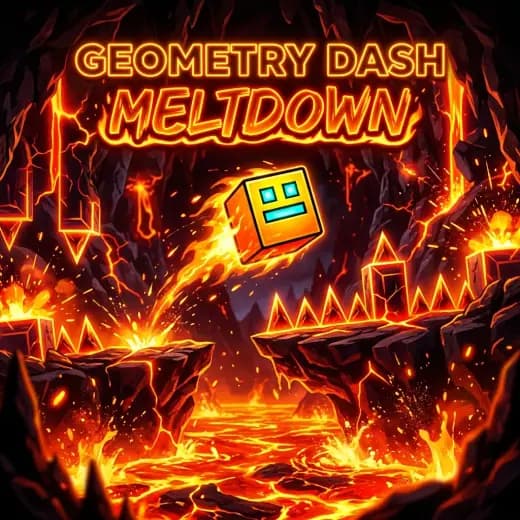
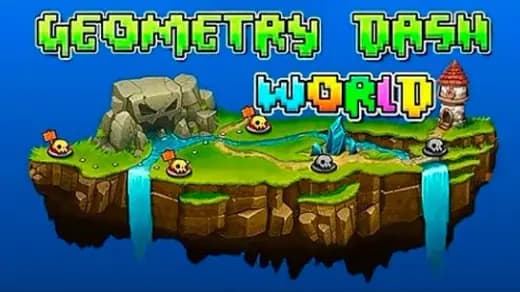
Meltdown, SubZero and World are compact official spin-offs, each with a short handful of levels and their own soundtracks. They are meaningfully harder than the opening levels of the original but far shorter than its later stages, which makes them good for building timing without committing to a long level.
If you have never finished a level, start with Lite or the first stage of the base game. Jumping straight into a later spin-off is the most common reason people conclude the game is unfair when it is simply sequenced.
How to practise instead of just retrying
Most players fail the same level hundreds of times without improving, because retrying is not practising. The difference is attention: pick the single transition you keep missing and play only for that, ignoring whether the attempt continues afterwards.
Count the beat out loud on the section you are learning. Converting a visual pattern into a spoken rhythm is what moves the input from reaction to muscle memory, and it works far faster than another fifty blind attempts.
Resist changing your approach after every death. If you alter your timing each attempt you never gather evidence about which timing was right. Commit to one interpretation for several runs, then adjust deliberately.
Stop when your attention drops. Accuracy in a timing game decays quickly with fatigue, and a tired session teaches you the wrong rhythm — coming back fresh with a specific goal beats grinding.
Versions you can play here
The builds below run in a browser with no download, from Lite through the spin-offs to the standard version. Desktop uses a key or mouse click to jump and touch devices use a tap; each game page lists the controls for that build.
Quick Answers
Can I play Geometry Dash online for free?
Browser-playable builds run free in a supported web browser with no download. The full commercial release is sold separately on mobile stores and Steam by its developer; check each game page here for what that particular build includes.
Which Geometry Dash version is easiest?
The Lite builds, followed by the opening levels of the standard version. The spin-offs such as Meltdown and SubZero are short but noticeably harder than the early base levels.
Why is Geometry Dash so hard?
Because it is a rhythm game with instant failure. Your cube moves at a fixed speed, so a level is a memorised sequence of timed jumps rather than something you can navigate cautiously. Learning the level by its music is what makes it click.
Do I need sound on to play?
You can play muted, but you will improve much more slowly. The soundtrack marks when each jump lands, so it functions as the timing cue rather than as background audio.